Toothsome cucumbers with beautiful deep-green, shiny skin. 'Mideast Peace' has a everything you want in a cucumber - sweet flavour, crunchy texture and it keeps well. Its one of the most robust cucumber varieties we've grown. The plant photos in this description were taken in October! As with all Lebanese-type cucumbers, the fruit are stouter than a standard supermarket cuc - they max out at 15cm. A true dual purpose variety - harvest thumb-sized for pickles or to palm-sized for Shirazi salads all summer long.The vines grow from 1-1.5m and can be trained on strings or left to sprawl although the cucumbers are better quality when trained. Mideast Peace was bred by Dr. Alan Kapuler of Peace Seeds (Corvallis, Oregon) for cool climates and we've found this variety to be both early and prolific in unpredictable British summers.Sow: April on a sunny windowsill or heated propagator at 21C.Plant: Harden off and plant into unheated greenhouse/polytunnel after risk of frost has passed. Usually ready to transplant 4 weeks after sowing. Plant at 60cm spacing, train up strings or leave to sprawl.Harvest: As baby cucs for pickles or for salads.Kitchen: Pickle or eat raw. Pairs with citrus (lemon, lime), aromatics and spices (dill, fennel, coriander, ginger, chilli, black pepper), alliums (spring onion, garlic, garlic chives), fats (sesame, cashew).Notes: Plants can be trained up strings or left to sprawl (and will take up a lot of room!).
Approx 20 seeds. We pack seeds by weight, the number of seeds in a packet is an estimate.
Germ 94% Aug 25
The best tasting perpetual spinach out there - sweet, tender, verdant green leaves on slim stems. Verde da Taglio is an easy-to-grow Italian heirloom which is perfect for gardeners who want to make the most out of their growing space. A couple of sowings will provide you with year-round greens. This is one of our favourite greens in the catalogue - we grow it every year without fail.Sow: April (undercover) & July (outside or undercover) for continuous supply. Plant: 4 weeks after sowing, or sow direct.Harvest: Baby leaves in 6 weeks, big leaves in 8-10 weeks. Harvest outside leaves.Kitchen: Eat baby leaves raw and cook older leaves - steam, sautee, or braise. Cook stems a little longer than leaves. Pairs with acid (lemon, balsamic vinegar, lime), fats (goats cheese, walnuts, coconut milk, butter), salty (olives, feta, parmesan), aromatics (chilli, nutmeg, dill, fennel, thyme).1.5g (approx 75 seeds). We pack seeds by weight, the number of seeds in a packet is an estimate.
Germ 82% July 25
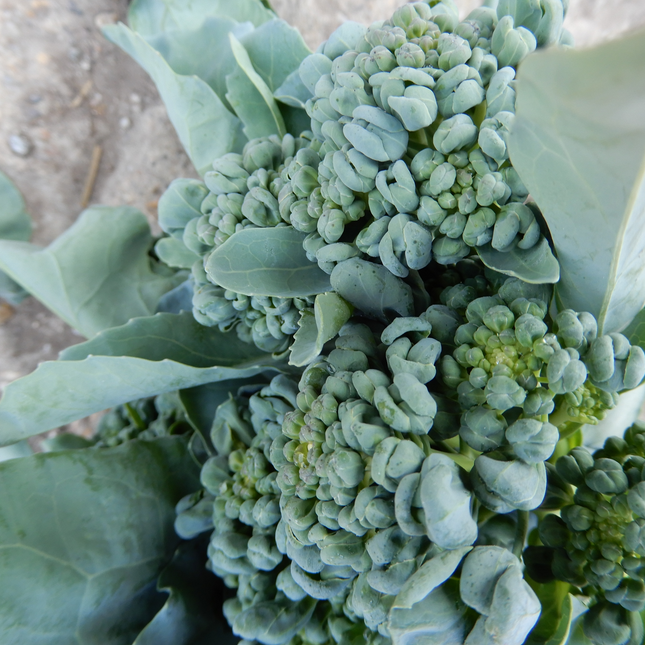
A loose heading broccoli which tastes divine - sweet & succulent stems completely devoid of the sulfurous flavour found in standard calabrese. Piracicaba (from Brazil) is a heat tolerant variety which can be grown right through the summer. The first mini broccoli head is followed by tonnes of side shoots. A great variety for small gardens because you get so many harvest from one plant.
Also a great one for market gardeners - read all about it here: https://growingformarket.com/articles/piracicabaSow: March-April (undercover or outside with fleece or cloche)Plant: May, 60cm spacingHarvest: Nov-Dec Kitchen: Roast or steam. Pairs with acidic flavours (lemon, balsamic vinegar). fats (bacon, ham, blue cheese, parmesan), nuts (hazelnuts, walnuts, chestnuts), aromatics (parsley, thyme).Notes: Plant deep and firm plants in very well to avoid toppling.0.4g (approx 100 seeds). We pack seeds by weight, the number of seeds in a packet is an estimate.
Germ 85% Aug 25
A productive salad leaf and stalwart cut flower rolled into one. Wrinkle Cress grows quickly and abundantly, adding pep to your salads from autumn through to spring. As the days lengthen, plants throw up shoots full of tiny white flowers which gradually transforming into graceful seed heads. The seed heads can be picked when glaucous green or when dry and silvery. They are super versatile - an easy way to add texture to late summer and autumn arrangements. Use fresh or dried.
Sow: mid March-May & Aug-Sept (undercover or outside)
Plant: direct sow or plant 10-20cm apart
Harvest: Salad leaves 4-8 weeks after sowing. Cut seed heads when the uppermost flowers have faded.
Kitchen: Eat fresh in winter and early spring salads. Pairs with citrus (orange, lemon, lime), aromatics and spices (coriander, ginger, five spice, chilli), alliums (spring onion, garlic), fats (sesame, cashew).
Vase: Expect fresh seed heads to last for a week.
1g (approx 400 seeds). We pack seeds by weight, the number of seeds in a packet is an estimate.
Germ 97% Oct 25
All cut flower seeds are subject to 20% VAT which is added at checkout. If your order contains VAT-able goods, 20% VAT is also charged on shipping.
A tasty Chinese mustard with brightly coloured stems ranging from purple to fuchsia to baby pink. Leaves are shiny with serrated edges, coloured vivid green or deep burgundy. A colourful addition to baby salad mixes but also tastes great cooked.Vivid choi is slow to bolt, cold hardy and versatile in the kitchen. A good choice for home gardeners looking to grow delicious greens you can't buy in the shops.Sow: mid March-May & Aug-Sept (undercover or outside)Plant: densely for baby leaves, 20cm for salad leavesHarvest: 4-8 weeks after sowingKitchen: Eat fresh, braised or stir fried. Pairs with citrus (lemon, lime), aromatics and spices (coriander, ginger, five spice, chilli), alliums (spring onion, garlic, garlic chives), fats (sesame, cashew).Notes: Early sowings benefit from fleece. Sowings bolt around the solstice. Long harvest period, particularly over winter - you'll have greens from October into spring. Cool weather and plant maturity bring out the purple and pink colouring.
Download our Winter Salads Growing Guide to learn more about growing winter greens.
1g (approx 450 seeds). We pack seeds by weight, the number of seeds in a packet is an estimate.
Germ: 97% July 25
Lacey, magenta leaves which are more refined than similar varieties available such as 'Purple Frills' and 'Ruby Streaks'. A stalwart salad mustard for cut-and-come again winter salads. The young leaves are mild, becoming more peppery as the plant ages. Slugs and snails tend to leave this variety alone - perhaps because of its unique leaf shape. The young leaves are mild and become more spicy as they age and spring approaches.
As with most of the salad greens in this catalogue, their use in the UK can all be traced back to the godmother of Grow Your Own, Joy Larkcom. Her book 'The Salad Garden' originally published in 1987 is a seminal work on the subject. Her careful recommendations are both tasty and decorative, as she puts it, salad vegetables which 'feed the body and the spirit'.Sow: mid March-May & Aug-Sept (undercover or outside)
Plant: densely for baby leaves, 20cm for salad leaves
Harvest: 4-8 weeks after sowing
Kitchen: Eat fresh or stir fried. Pairs with citrus (lemon, lime, ponzu), aromatics and spices (turmeric, ginger, five spice, chilli), alliums (spring onion, garlic, garlic chives), fats (sesame, cashew).
Notes: Early sowings benefit from fleece. Sowings bolt around the solstice.
Also available in our 'Cool Greens' winter salad seed collection.
Download our Winter Salads Growing Guide to learn more about growing winter greens.
1g (approx 450 seeds). We pack seeds by weight, the number of seeds in a packet is an estimate.
Germ rate: 81% July 25
A dusky red butterhead for spring, summer and autumn cropping. Forms satisfying, compact heads with outside leaves tinged red, fading to a lime green heart. Suited to spring, summer and autumn cropping and holds an RHS AGM for summer cropping on account of it being slow to bolt. Lettuce is a very ancient crop, originally domesticated by the ancient Egyptians for its seeds and sap which were used as a pain killer and sedative. The Romans went on to cultivate lettuce for its leaves and used it as a braising green.Sow: Feb-May undercover, May-July outside. Stagger sowings for continuous supply.Plant: 4-6 weeks after sowing, plant 20cm apartHarvest: Feb-AprilKitchen: Best used in salads.Notes: To make the most out of your space, you can sow/plant 10cm apart then harvest every other plant leaving the remaining half to head up. Do not let seeds get hot when germinating. 15C is ideal, anything above 18C encourages seed dormancy.
0.25g (approx 200 seeds). We pack seeds by weight, the number of seeds in a packet is an estimate.
Germ 97% Sept 25
Our Desert Island onion. Cuisse de Poulet du Poitou is a banana shallot bursting with savoury-sweetness. Its mild enough to be served raw but really sings when cooked low and slow. The bulbs are about the size of an onion - you get proper shallot flavour without the extensive peeling. And they're beautiful - elegant, elongated bulbs with a rusty-rose skin.Sow in March - 3-5 seeds per modules a la Charles Dowding. Harvest fresh and you can use the stems too. Later harvests have a more pungent flavour. Dry the bulbs out after harvest and they'll keep until December.Sow: multi-sow 3-5 seeds per module, March undercoverPlant: 20cm spacing between modulesHarvest: July-AugustKitchen: Pairs with everything. Use raw or cooked in a myriad of dishes.1g (approx 250 seeds). We pack seeds by weight, the number of seeds in a packet is an estimate.
Germ 94% Sept 25
Rothild is a sweet, fragrant carrot which is easy to grow. The roots are bright, cartoon carrot orange, signifying their high carotene content. Intense colouring = more nutritious. A joy to eat and a joy to grow. We find it to be a very productive carrot, yielding lovely long roots even on our heavy clay soil. Sow: May until mid-July, direct sow.Harvest: At least 12 weeks from sowing.Kitchen: Roast, braise or eat raw. Pairs well with acid (balsamic, white wine, lemon), aromatics (cumin, dill, mint, thyme, rosemary, coriander, ginger, chilli), fats (sesame, olive oil), alliums (leeks, garlic).Notes: Sow late May to early June to avoid carrot root fly.1g (approx 800 seeds). We pack seeds by weight, the number of seeds in a packet is an estimate.
Germ 94% Jul 25
Ratio is a short, well branched broad bean which is our pick for small vegetable gardens. It was a top performer in our container growing trial of 2024 and its bushy habit makes it perfect for anyone who wants to avoid staking their beans. The pods are shorter-than-average (much like the plants) and the beans are plump and delectable.This is an all-round brilliant variety specifically bred for organic growing conditions by De Bolster in the Netherlands. Sow: Valentines day - May direct 20-30cm apartHarvest: June - JulyKitchen: Steam or sautee. Pairs well with alliums (garlic, onions, shallots), fats (butter, feta, smoked fish, bacon), aromatics (mint, dill, parsley, chilli).Notes: Keep an eye out for black fly and nip the growing tips off at the first sign of invasion.36g (approx 30 seeds). We pack seeds by weight, the number of seeds in a packet is an estimate.
Germ: 92% Oct 25
Lilia is a lovely little spring onion - vibrant red, right to the core. Leaves are a deeper shade of green than most spring onion varieties. We love to harvest this variety once it has begun to bulb up. The gorgeous, shiny salad onions have a mild flavour, lending themselves to be eaten raw.
Sow: Feb-March undercover, April-July outside. Sow clusters of 10 in modules or sow direct 5cm apart. Stagger sowings every 8 weeks for continuous supply.
Plant: 4-6 weeks after sowing, plant clusters 20cm apart
Harvest: June-October
Kitchen: Best used in salads or slowly caramelised.
Notes: Keep cool while germinating. Temperatures above 20C inhibit germination.
Allium cepa
1.5g (approx 375 seeds). We pack seeds by weight, the number of seeds in a packet is an estimate.
A crisp, green Batavian type with a hint of an iceberg lettuce about it (in the very best way possible). Leaves are sweet in flavour and well-savoyed so they hold a salad dressing well. Can be grown for cut and come again baby leaves or as a heading lettuce.Lettuce is a very ancient crop, originally domesticated in Africa by the ancient Egyptians for its seeds and sap which were used as a pain killer and sedative. The Romans went on to cultivate lettuce for its leaves and used it as a braising green.Sow: March-July for harvests into autumn. March-April undercover, May outside. Four sowings across the year will have you eating plentiful salad leaves year round if you harvest by picking leaves off the stem.Plant: 4 weeks after sowing at 20-30cm spacing.Harvest: 8 weeks after sowingKitchen: Crisp - perfect for a shredded with red cabbage and red onion for a kebab-style salad.Notes: Do not let seeds get hot when germinating - 15C is ideal, anything above 18C encourages seed dormancy.0.25g (approx 200 seeds). We pack seeds by weight, the number of seeds in a packet is an estimate.
Germ 97% Jul 25
The best tasting deep red tomato we've grown - a moreish balance of sweetness and acidity. Exactly as a cherry tomato should taste! A very impressive open pollinated variety, bred by Kings Seeds and awarded the RHS AGM for excellent flavour. Plants are healthy, productive and vigorous. Rosella is a vining, (indeterminate) variety which is best grown undercover, grown up strings - either in the ground or in containers.
Sow: March, with heat (25C)
Harvest: July-September
Kitchen: Pairs with savoury (anchovies, capers, cured pork), aromatic (basil, coriander, thyme), spicy (anise, clove, cinnamon), fats (avocado, cream cheese).
Approx 15 seeds. We pack seeds by weight, the number of seeds in a packet is an estimate.
Germ Rate: 96% Sept 25
A kale that needs very little introduction. Nero di Toscana has a reputation for being the kale of choice for any gardening gourmet. The long, deep green leaves are more tender than standard curly kales with a flavour that sweetens after the first frost. A Tuscan heirloom which has been bred to withstand both hot and cold temperatures, you can harvest this kale from late summer to early spring.
Sow: March-April (undercover or outside with fleece or cloche)
Plant: May, 45cm apart
Harvest: Late summer- early autumn
Kitchen: Roast, steam, sautee or braise. Pairs with acidic flavours (lemon, white wine), fats (sesame, bacon, chorizo, walnuts, parmesan), alliums (garlic, leeks), aromatics & spice (mustard, cumin, parsley, coriander, ginger, chilli).
Notes: To avoid massive cabbage heads, grow no further than 45cm apart. As with all brassicas, plant deep to avoid toppling
Brassica oleracea
0.5g (approx 125 seeds). We pack seeds by weight, the number of seeds in a packet is an estimate.
Smooth, round crimson roots with a good crunch. They look particularly beautiful sliced into rounds, pure white flesh contrasting with the bright red skin. They taste best pulled straight out of the ground, soil rubbed off on a trouser leg. Eat from marble sized, all the way to the size of a ping pong ball. You'll be surprised at how big the roots can get without getting spongy or spicy. This variety has a particularly long harvest window and is resistant to downy mildew. Sow: February (undercover) until May. Sow little and often.Harvest: 4 weeks from sowing, longer if sown early.Kitchen: Raw, pickled or braised. Pairs well with fats (melted butter, aioli, sour cream, yogurt, walnuts), aromatics (rosemary, anise, thyme, dill, mint), citrus (lemon).4g (approx 275 seeds). We pack seeds by weight, the number of seeds in a packet is an estimate.
Germ: 89% Aug 25
Little Finger is one of the best carrots to grow with children. They are fast growing, sweet tasting and a very satisfying size. The medium-long roots grow up to a finger-width wide (hence the name) so they are ideal left whole and crunched as kids snacks or crudites. Unlike most carrot varieties, Little Finger is specifically adapted to clay soils - one to try if you’re still trying to grow your first straight carrot!
Sow: May until mid-July, direct sow.
Harvest: At least 12 weeks from sowing.
Kitchen: Roast, braise or eat raw. Pairs well with acid (balsamic, white wine, lemon), aromatics (cumin, dill, mint, thyme, rosemary, coriander, ginger, chilli), fats (sesame, olive oil), alliums (leeks, garlic).
Notes: Sow late May to early June to avoid carrot root fly.
Daucus carota
1g (approx 800 seeds). We pack seeds by weight, the number of seeds in a packet is an estimate.
The best dwarf French bean we've found for delectable, fine green beans. The beans are straight, narrow - what we think of as a true French bean, quite different from thicker green bean varieties. The plants are upright with strong growth to support heavy harvests.
Like many dwarf varieties, Faraday has been bred to produce abundant beans over a few weeks. Sow a second succession for late summer harvests, or a later maturing variety such as Dior.
Sow: April undercover, May-June outside
Plant: 30cm apart
Harvest: July-September, pick regularly.
Kitchen: Cook lightly and pair with savoury (parmesan, bacon), aromatic (tarragon, ginger), acid (white wine, lemon), fats (olive oil, almonds).
Phaseolus vulgaris
7.5g (approx 45 seeds.) We pack seeds by weight, the number of seeds in a packet is an estimate.
Finally, a deep purple bean that actually tastes good! The pods are slender, slightly flattened and beautifully straight. They start off as soft lilac flowers which are something to be appreciated in their own right. As with most purple vegetables, the purple colour disappears once they're cooked. Fun while it last though, and the beans are easy to spot when you're harvesting. Blooming Prairie is a dwarf French bean and the plants will grow to 30cm off the ground - no need to stake.
Sow: April undercover, May-June outside
Plant: 30cm apart
Harvest: July-September, pick regularly.
Kitchen: Cook lightly and pair with savoury (parmesan, bacon), aromatic (tarragon, ginger), acid (white wine, lemon), fats (olive oil, almonds).
Notes: Sow a second succession in June for continuous harvest.
Phaseolus vulgaris
9g (approx 30 seeds). We pack seeds by weight, the number of seeds in a packet is an estimate.
Vibrant green leaves a top long, slender white stems with no bulbing. Ishikura is a fantastically robust and frost hardy Japanese variety with a crisp texture and mild onion flavour. Awarded an RHS AGM for its vigorous growth. Sow every couple of months for harvests throughout the year.
Sow: Feb-March undercover, April-September outside. Sow clusters of 10 in modules or sow direct 5cm apart. Stagger sowings every 8 weeks for continuous supply.
Plant: 4-6 weeks after sowing, plant clusters 20cm apart
Harvest: Year round
Kitchen: Best used in salads or slowly caramelised.
Notes: Keep cool while germinating. Temperatures above 20C inhibit germination.
Allium fistulosum
1.5g (approx 375 seeds). We pack seeds by weight, the number of seeds in a packet is an estimate.
Germ Rate: 91% Sept 25
Crisp, sunshine yellow beans with a bright, buttery flavour. One of the best tasting French beans we've grown. We offer the white seeded strain of this variety which we think is more tender than the black seeded type. The pods are wide and flattened and tend to curve if grown outside. An easy-to-harvest variety on account of the brightly coloured beans.
Our original seed for this variety was gifted to us by incredible heirloom bean seed producer Pippa Rosen from Beans & Herbs.
Sow: April undercover, May-June outside
Plant: 30cm apart
Harvest: July-September, pick regularly.
Kitchen: Cook lightly and pair with savoury (parmesan, bacon), aromatic (tarragon, ginger), acid (white wine, lemon), fats (olive oil, almonds).
Notes: This is a climbing French bean and will easily grow to 6ft so stake accordingly.
Phaseolus vulgaris
15g (approx 40 seeds). We pack seeds by weight, the number of seeds in a packet is an estimate.
A fabulously large podded heirloom mangetout, originating from the south of France. Brilliant to grow with kids because the sweet, 12cm long pods are easy to spot and pick. The peas keep on the vines for ages before they get starchy or stringy. Unlike most modern pea varieties, Carouby de Maussane produces long vines (up to 1.5m) and has an extended harvest season - ideal for home gardeners.
Sow: March to May outside
Harvest: June - July
Kitchen: Steam or sautee. Pairs well with alliums (garlic, onions, shallots), fats (butter, feta, smoked fish, bacon), aromatics (mint, dill, parsley, chilli).
Pisum sativum
18g (approx 100 seeds). We pack seeds by weight, the number of seeds in a packet is an estimate.
Stridolo (A.K.A. Sculpit) is the cultivated form of wild plant Bladder Campion. It's a beautiful Italian heirloom which we love to grow as a delicate addition to salad mixes. The glaucous green foliage is very elegant. Leaves are succulent with a mild flavour - a little aromatic with a mild, pleasant bitterness. One sowing will last you the year. We also love the dainty white flowers for cutting.Sow: April-MayPlant: 4 weeks after sowing once soil has warmedHarvest: 8-10 weeks after sowingKitchen: Use fresh or just wilted. Used in Italy as part of a bitter greens mix, in pasta and egg dishes.0.25g (approx 400 seeds). We pack seeds by weight, the number of seeds in a packet is an estimate.
Germ 99% Sept 25
An unusual rocket variety with deep green, broad leaves which aren't lobed like standard rocket varieties. It is slower growing and slower to bolt than more vigorous alternatives such as 'Victoria'. A substantial, peppery leaf for salads harvested between autumn and spring.Sow: mid March-May & Aug-Sept (undercover or outside)Plant: densely for baby leaves, 20cm for salad leavesHarvest: 4-8 weeks after sowingKitchen: Eat fresh or just wilted. Pairs with citrus (lemon, balsamic vinegar), aromatics (basil, dill, mint) and spices (chilli), salty (capers, olives, feta), fats (blue cheese, goats cheese, pine nuts).Notes: Early sowings benefit from fleece.
Download our Winter Salads Growing Guide to learn more about growing winter greens.0.5g (approx 250 seeds). We pack seeds by weight, the number of seeds in a packet is an estimate.
Germ 92% Jul 25
Golden Frills is a vigorous variety, producing an abundance of lacy, golden-green leaves. A stalwart mustard for cut-and-come again winter salads. The young leaves are mild, becoming more peppery as the plant ages. I find slugs and snails tend to leave this variety alone - perhaps because of its unique leaf shape. Harvest the yellow flowering tips too - they're spicy and sweet.Golden Frills, along with a lot of the popular Asian greens, was popularised in the UK by the godmother of Grow Your Own, Joy Larkcom. Her book 'The Salad Garden' originally published in 1987 is seminal. Her careful recommendations are both tasty and decorative to 'feed the body and the spirit'.Sow: mid March-May & Aug-Sept (undercover or outside)Plant: densely for baby leaves, 20cm for salad leavesHarvest: 4-8 weeks after sowingKitchen: Eat fresh or stir fried. Pairs with citrus (lemon, lime, ponzu), aromatics and spices (turmeric, ginger, five spice, chilli), alliums (spring onion, garlic, garlic chives), fats (sesame, cashew).Notes: Early sowings benefit from fleece. Sowings bolt around the solstice. Long harvest period, particularly over winter - you'll have greens from October into spring.
1g (approx 450 seeds). We pack seeds by weight, the number of seeds in a packet is an estimate.
Germ 87% Aug 25